
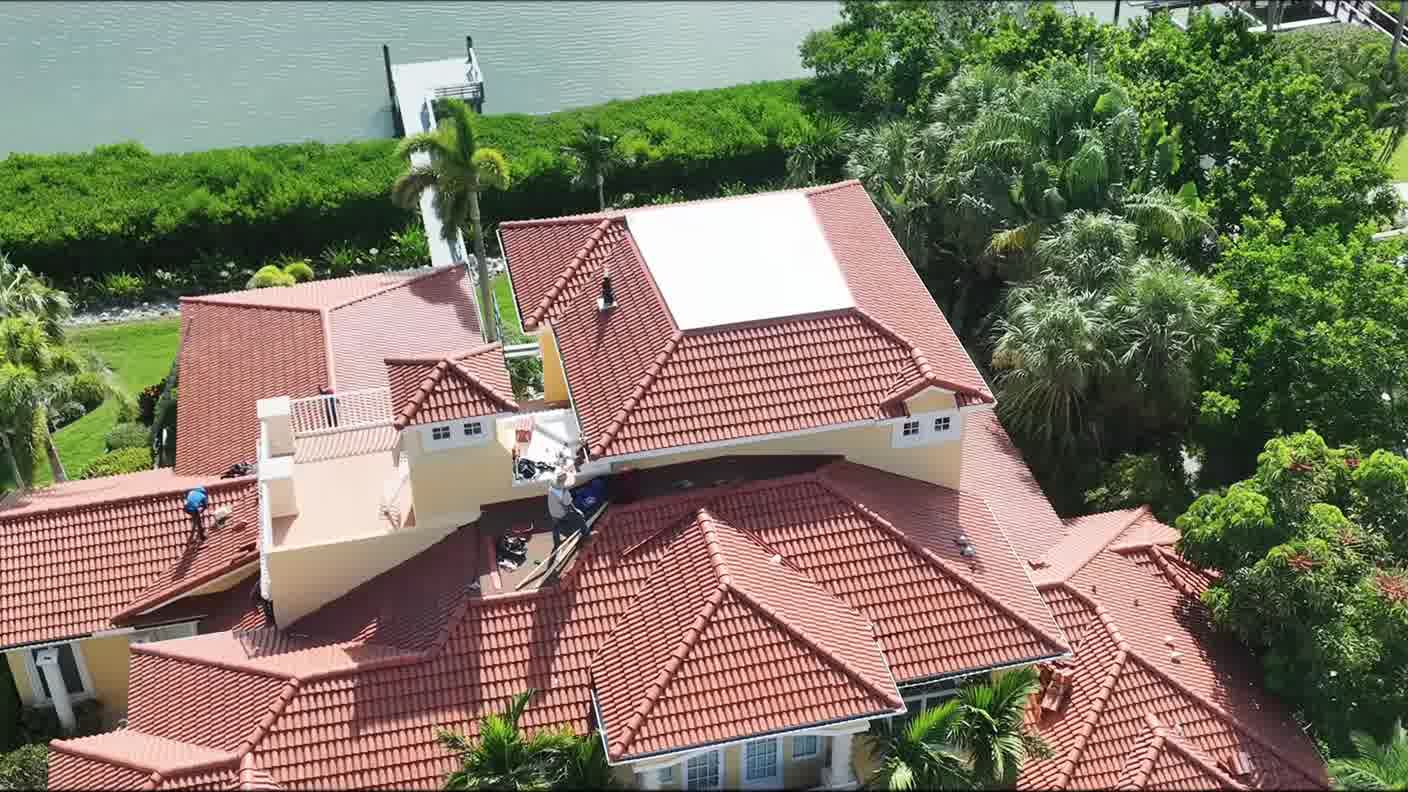
Storm damage
Hurricane Roof Damage: What to Do First
The first few days matter. How to stay safe, document the damage properly, and spot a storm chaser.
Limited time offer 4 point home inspection or wind mitigation with any new roof See what is includedAfter hurricane roof damage, do things in this order: stay off the roof, document everything from the ground, cover openings to stop more water getting in, then call a licensed contractor. The order matters more than the speed, because photographs taken before anything is touched are what a claim rests on.
After a storm the pressure is to get someone on the roof immediately. A couple of these steps are about not getting hurt, which is why they come first.
Safety first, and that means staying off the roof
A storm-damaged roof is not a safe surface. Decking can be soft where water has got in, and it does not look different from the ground. Treat any downed line as live and keep well clear. If ceilings are sagging or you can hear water moving inside the structure, stay out of those rooms.
Document from the ground before anyone climbs anything
Photograph every side of the house, the yard, and any interior damage, before repairs. Wide shots that establish the whole property, then close-ups. If debris hit the house, photograph the debris where it landed. This is the evidence your claim rests on and it disappears the moment tidying starts.
Cover openings, then stop
A tarp over an opening prevents days of further water damage and is worth doing. A full repair is not — it removes the evidence before anyone has assessed it. Keep the receipts for tarps and materials.
Water damage keeps going after the storm
Water that got into a roof does not stay in the roof. It travels along framing and sits in insulation, and in Florida humidity that becomes a mold problem within days. That is why a temporary cover is urgent even when the visible damage looks small.
Storm chasers, and how to spot one
After every major storm, crews arrive from out of the area, knock doors, and press for a signature that day. Some are fine. The tells are pressure to decide immediately, a large cash deposit up front, no local address, no license number they will give you, and an offer to “handle your whole claim”. A licensed Florida contractor will give you their license number without being pushed — ours are CCC 1335152 and CRC 1334301, printed on every page of this site.
Get the scope in writing
Whoever does the work, get a written scope: what is being replaced, what is being repaired, what happens if more damage is found once the old roof is off. “We will sort it out as we go” is how disputes start.
We do emergency tarping and after-hours storm work, and it is a large part of what we do after a storm. Call 239-414-9100 during business hours and we will respond the same day. We also document the damage thoroughly as we go, because that documentation is what an insurance claim later rests on.
Want this looked at on your own home?
Let our experts look over your property—no cost, no obligation.